My first seed order of the year, Baker Creek Heirloom Seeds
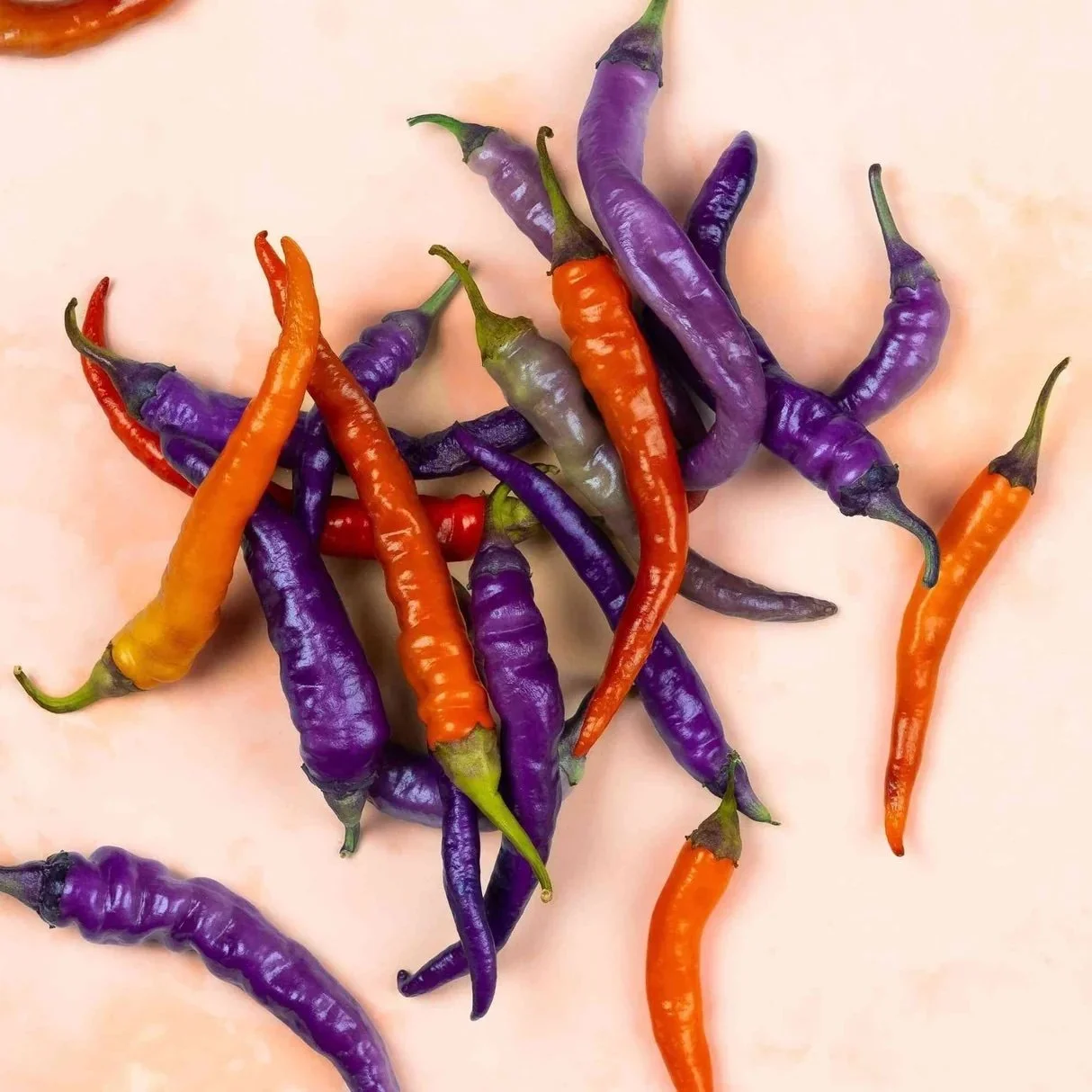
‘Buena Mulata’ hot pepper has a rich history, is beautiful and tasty too.
I recently talked on the radio about my first seed order of the year, which went to Baker Creek Heirloom Seeds.
I couldn’t find my stash of pepper seeds, so I decided to order some fresh seed. I’m sure my bag of old seeds will turn up, but there’s one pepper I just had to have.
I’ve grown the hot pepper ‘Buena Mulata’ before and loved the taste along with its remarkable changing of colors over the season.
I was introduced to William Woys Weaver through his book Heirloom Vegetable Gardening. The book was actually gifted to me by the managing editor of the Youngstown Vindicator in the 1990’s, who said, “this looks like something right up your alley.”
I actually met Weaver on two occasions while speaking at Baker Creek in Missouri, we had an enjoyable time trading stories about heirlooms.
’Buena Mulata’ was introduced to Baker Creek by Weaver, who found the seed in his grandfather, H. Ralph Weaver’s collection.
His grandfather received the pepper from African-American painter Horace Pippin in 1944.
Pippin was a WWI veteran and Purple Heart recipient. He was shot three times by a German sniper, receiving two flesh wounds and also a bullet in his shoulder, which cause permanent damage. Pippin could not lift his right arm above his head without assistance from his left hand, but could still paint.
Pippin would treat his injury with bee sting therapy and bartered with H. Ralph Weaver by trading plants for some of Weaver’s bees.
There was a nice garden marker on the National Mall which was a tribute to Pippin, erected by the Smithsonian Institution and was in place as late as 2024. It has since been permanently removed, but I can’t find out why.
In my research I found ‘Pippin’s Golden Honey’ pepper along with a ‘Fish’ pepper that is connected with the artist and gardener. This video talks about the ‘Fish’ pepper and Pippin. Here’s a video of all three peppers being harvested. Finally, a video from Baker Creek showing ‘Pippin’s Golden Honey’ pepper.
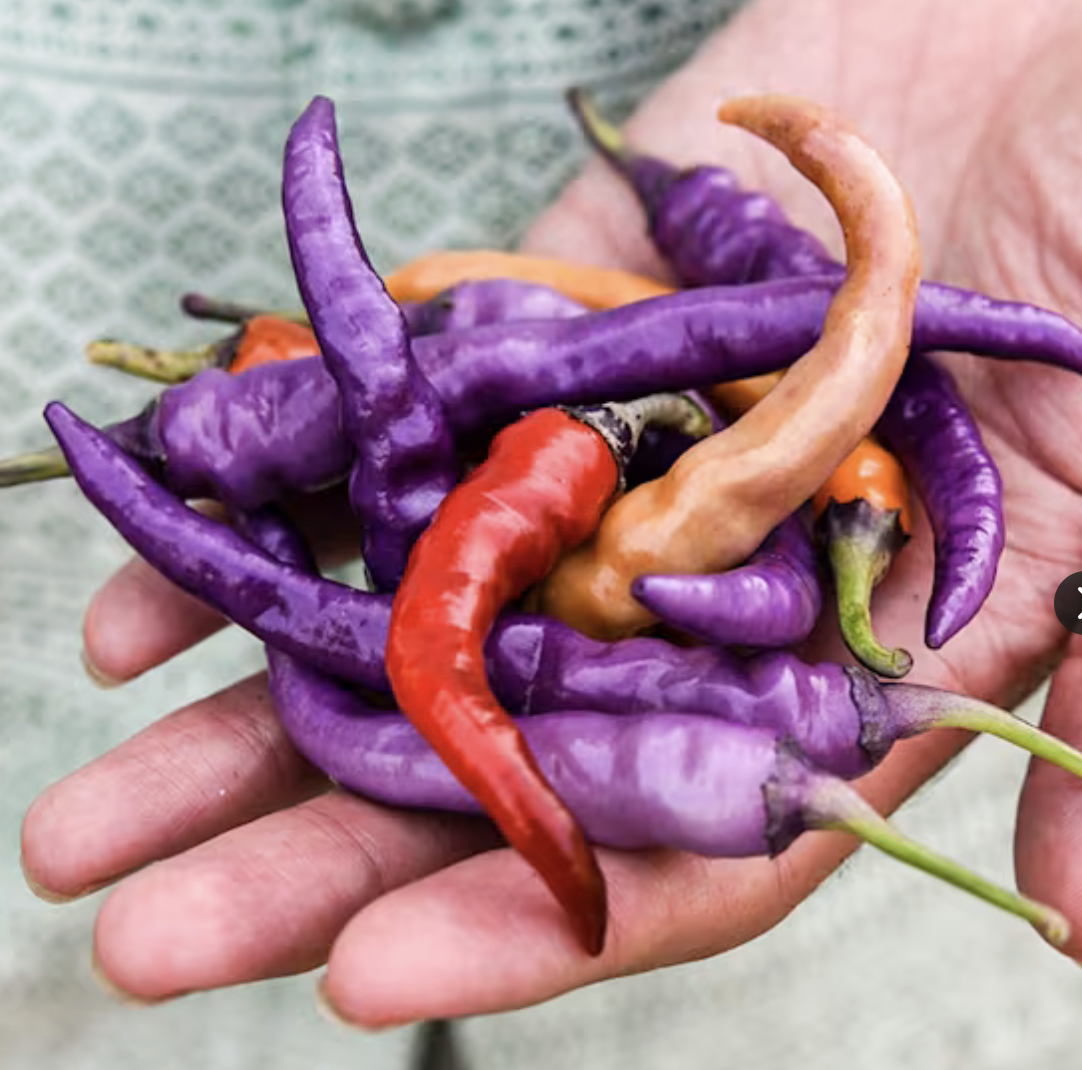
’Buena Mulata’ undergoes color changes during ripening, from violet to pink, then orange to brown, and eventually to a deep red.
The long, round pods reach 6 to 7 inches long and undergo a unique flavor change as they ripen, with the reds being more sweet and meatier than the violet.
I grow mine in pots and they are spectacular.
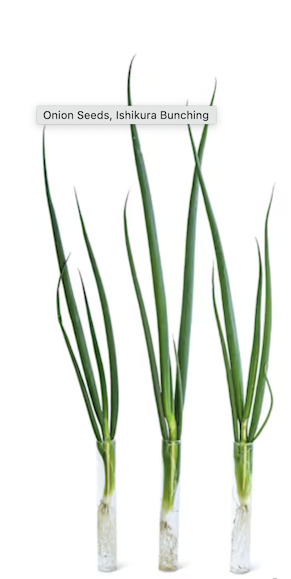
My order also included ‘Jimmy Nardello Italian’ sweet pepper, ‘Txorixero’ sweet pepper, ‘Imero’ dandelion, ‘Blauer Speck’ kohlrabi and ‘Ishikura’ bunching onion seeds.
Catalog descriptions-
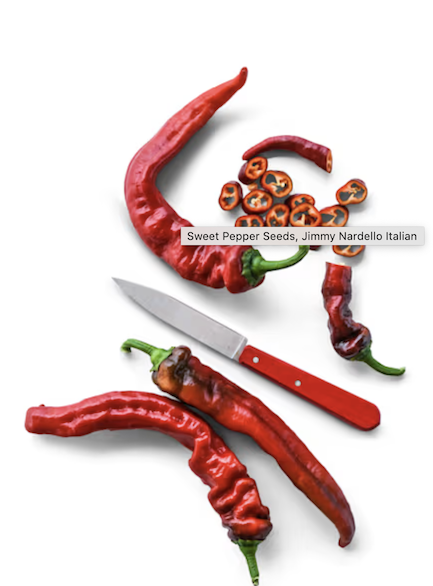
‘Jimmy Nardello Italian’- This fine Italian pepper was grown each year by Giuseppe and Angella Nardello in their garden in the village of Ruoti, in southern Italy. In 1887 they set sail with their one-year-old daughter, Anna, for a new life in the U.S. They settled in Naugatuck, Connecticut, and in their garden grew this same pepper, which they named for their fourth son, Jimmy. This long, thin-skinned frying pepper dries easily. Its rich taste earned it a place in Slow Foods' Ark of Taste. It grows well in most areas.
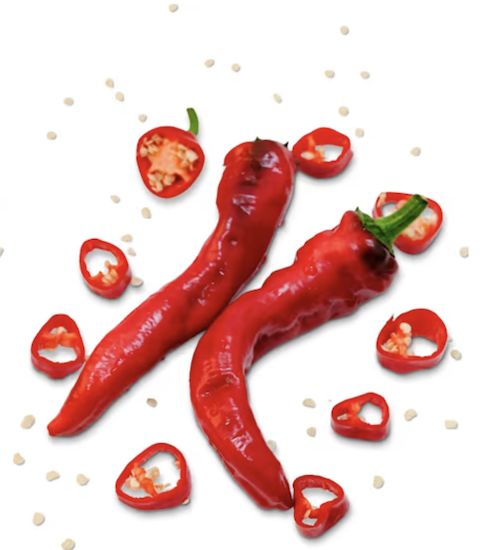
‘Txorixero’ sweet pepper- Pronounced “cho-dee-share-doe” A sweet frying pepper that is a traditional variety of the Basque people. This super rare and delicious pepper can be found growing across Europe’s Basque country; it is a key ingredient in Biscaya sauce and other delicious regional recipes. The thin-skinned, totally sweet peppers are traditionally strung into garlands and hung for later rehydration and can also be ground into paprika. Also excellent for fresh use, we love them raw in salads or blistered on the grill. This particular strain was brought to Boise, Idaho, over 50 years ago by Ben Goihiadia. We received the seed from Peaceful Belly Farms. In the early 1900s many Basques emigrated to Idaho for sheep herding jobs, and now Boise is a “little Basque country” of sorts.
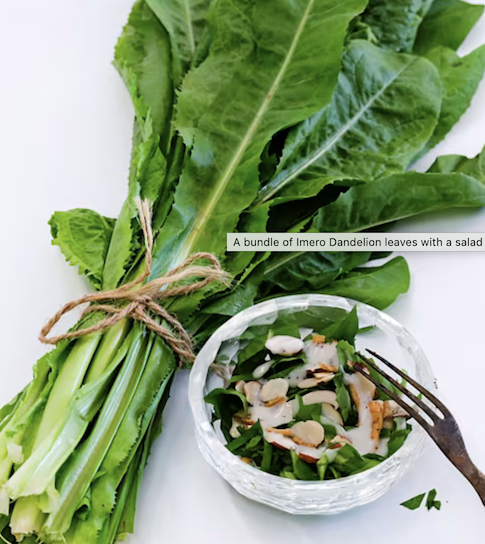
‘Imero’ dandelion- A superb salad green with a sweet, mild flavor that rivals the best. Chicory ‘Imero’ offers long, dandelion-like leaves that can grow up to 2 feet long, making it a dramatic and tasty addition to any garden. Often sold as dandelion leaves, ‘Imero’ is much more mild and sweet, with a delicate, tender texture that’s perfect for fresh salads. It’s hands-down one of the sweetest chicory varieties around, making it our premium choice for gardeners looking to elevate their greens game. Ideal for those who love a leafy, refreshing bite without the bitterness of traditional chicory.
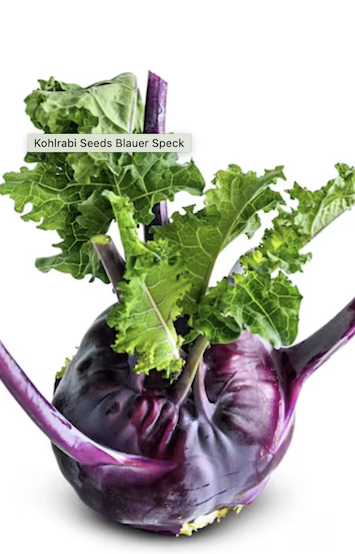
‘Blauer Speck’ kohlrabi- This old German heirloom produces gorgeous, violet-blue frosted globes. The name translates to "Blue Bacon Kohlrabi," thanks to the hypnotic blue color and ultra fine-grained, buttery-flavored stems. Originally introduced in 1914, the large, flattened stems have an incredible storage life, which was of paramount importance before the advent of modern refrigeration. This old commercial variety is perfect for small farmers and backyard gardeners. Blauer Speck has small, sparse leaves, more conducive to a tight planting in order to save space in the garden.
‘Ishikura’ bunching onion- A uniform and flavorful bunching onion, it is a popular and traditional Japanese variety for sukiyaki, soup, and salads. Ishikura reaches enormous proportions (to two feet tall, one inch across) while remaining tender and scallion-like, never forming a bulb. A perfect heat- and cold-tolerant green and a go-to choice to grow alongside Asian greens in the cool season! No garden should be without this easy-to-grow culinary staple!